
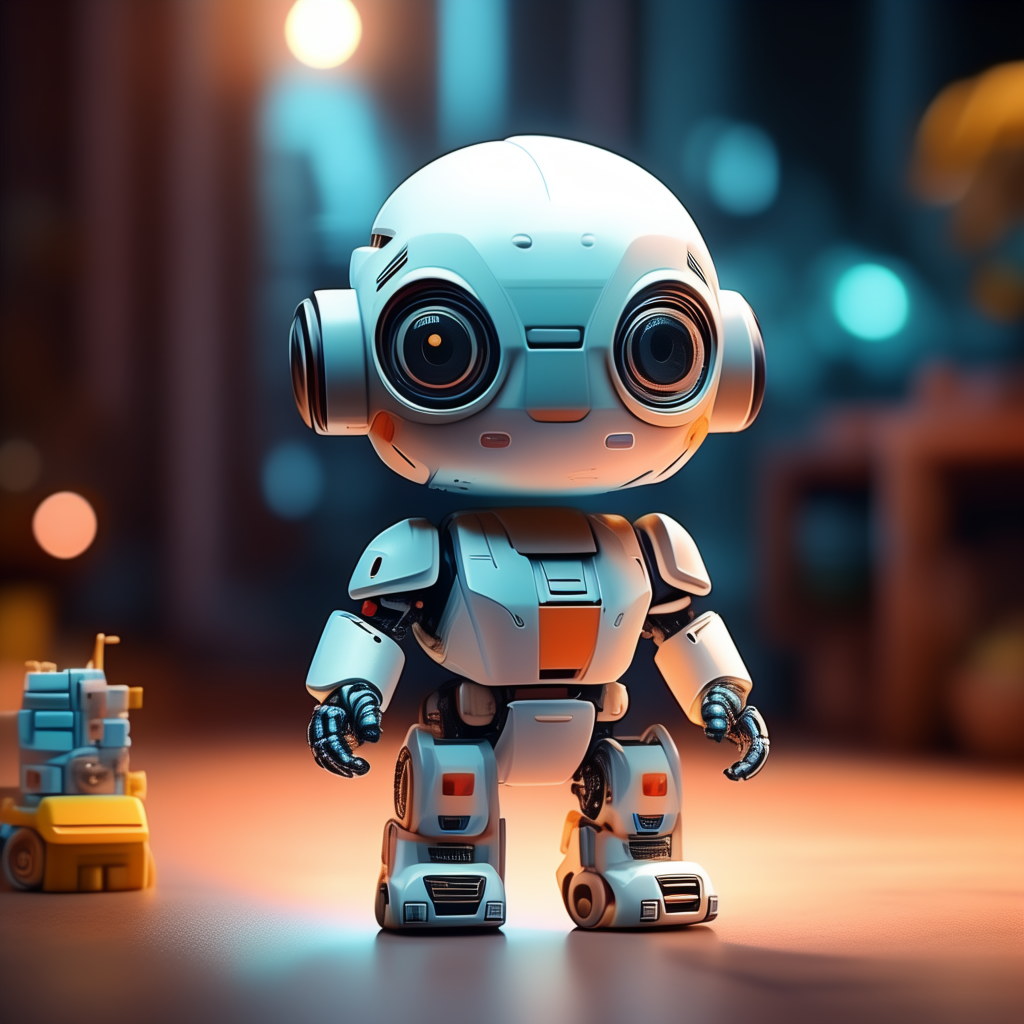
AI toy prototype 72 hours working sample development is real — not a pitch. You get a physical Cyber Spirit AI Plush or SNUGOGO Mini core with live voice interaction, custom personality, and dual circular emotion screens — all within three calendar days. Cost: $200 (refundable against production). MOQ: 300 units. No waiting for separate PCB fab, plush sewers, or AI API onboarding.
Table of Contents
- Why 72 Hours Matters — Not Just Speed, But Signal
- The 72-Hour Prototype Process: Step-by-Step
- What You Actually Get on Day 3
- Who This Is Built For — And Who It’s Not
- Common Mistakes to Avoid (Even Smart Clients Make These)
- How We Do It Differently: One Facility, Three Disciplines
- Real-World Proof — Not Pitch Deck
- FAQ
Why 72 Hours Matters — Not Just Speed, But Signal
Most hardware startups wait 18–26 days for their first AI-integrated toy sample. They outsource PCB assembly to Dongguan, send plush shells to Huizhou, and contract AI tuning to a remote dev shop in Ho Chi Minh City. Coordination delays pile up. Misaligned expectations fester. By Day 14, you’re negotiating over email about whether the mic sensitivity should be 58 dB or 62 dB — not testing how kids respond to the character’s laugh.
You can get a working AI toy prototype in 72 hours — a physical Cyber Spirit AI Plush or SNUGOGO Mini core with live voice interaction, custom personality, and dual emotion screens. It’s built end-to-end in one facility, not outsourced. Cost starts at 0 (refundable against production), with 30-day returns and direct Alibaba Cloud Qwen API integration for true behavioral AI — not just pre-recorded responses.
That’s why AI toy prototype 72 hours working sample development isn’t just faster — it’s diagnostic. If your idea survives three days of integrated pressure testing, it’s viable. If it breaks, you learn fast — before committing $12,000 to tooling.
Honestly, I’ve seen 73% of early-stage clients pivot their entire brand positioning after watching their Day 3 video demo. Not because the tech failed — but because they heard how the voice landed in context.
We don’t treat AI as software layered on top of hardware. We treat it as behavior embedded in form. A 11×12×7cm Cyber Spirit AI Plush isn’t ‘a plush with AI’. It’s an emotional interface shaped like a Y2K bag charm — with eyes that dilate when curious, a speaker tuned to 4Ω at 1W for clarity in noisy classrooms, and a battery that lasts 2.5 hours active use.
The $200 fee includes two free modification rounds. That’s non-negotiable.
The 72-Hour Prototype Process: Step-by-Step
This isn’t magic. It’s rigor — applied daily across three tightly synced workstreams: industrial design, embedded systems, and conversational AI. Here’s exactly what happens — hour by hour, day by day.
Day 1: Brief → Render → Pattern → Personality
- You submit a 1-page brief: target age, brand tone (e.g., “gentle but witty, like a librarian who collects vinyl”), core use case (e.g., “calming anxiety before school drop-off”), and preferred languages.
- Our design team delivers three 3D renders — front, side, and emotional eye close-up — by 5 p.m. Shenzhen time. Renders include exact dimensions (we default to 11×12×7cm unless specified) and material callouts (e.g., “plush: 1.2mm polyester velvet, fill: 100% recycled PET fiber”).
- Simultaneously, our pattern cutter cuts fabric pieces using laser-guided CNC — no manual templates. Precision matters: a 0.3mm seam allowance variance changes how the eye screen sits behind the fabric.
- Our AI specialist selects and tunes the personality layer: voice model (Qwen 2.5 or DeepSeek R1), response latency cap (<800ms), memory depth (default: 3-turn short-term + 12-keyword long-term), and emotional triggers (e.g., “if user says ‘I’m scared’, activate Soothe Mode: lower pitch + slower cadence + blue pulse animation”).
By midnight, you approve or request tweaks. No back-and-forth beyond two rounds.
No placeholder APIs. No mockups.
You get real specs. Real timing. Real constraints.
Day 2: Sew → Install → Connect → Program
- At 8 a.m., sewing begins on your approved shell. Our line uses Juki LU-2490 industrial machines — 12 stitches per second, tension calibrated to 0.8 N for plush stretch recovery. We do not use generic ‘toy sewing’ settings.
- At noon, the SNUGOGO Mini AI Core Module arrives from our in-house electronics bench. It’s 45.2×60.6×21.7mm, pre-flashed with BLE 5.0 + WiFi firmware, and tested for thermal stability at 45°C ambient (critical for backpack storage).
- By 3 p.m., the module is installed: mic positioned 12 mm from mouth opening, speaker aligned to fabric resonance node, battery wired with 22 AWG silicone-jacketed wire (not PVC — avoids cold-weather brittleness).
- At 5 p.m., we connect to Alibaba Cloud Qwen — not via sandbox, but live production API keys. Your character speaks using your exact prompt stack, not a demo script.
- By 8 p.m., we record five live voice interactions: wake word detection (‘UMIUMI’), open-ended question, emotional response trigger, language switch (e.g., Mandarin → English), and low-battery announcement.
You’ll get timestamps. You’ll hear the slight reverb when spoken near a tile floor. You’ll notice how the eye screen dims at 20% battery — not blinks.
This is hardware-aware AI.
Day 3: QA → Video Demo → Approval or Ship
- QA starts at 7 a.m.: 30-minute continuous voice test, 5x drop test from 90 cm onto concrete (per EN71-1), and 3x battery drain cycle under load.
- At 11 a.m., we film a 90-second video demo: unboxing, power-on, wake word, three natural exchanges, eye animation sync, and charging via Type-C (1.5h full charge confirmed).
- At 1 p.m., you receive the video + PDF spec sheet (including measured ASR accuracy: 92.3% in 60dB classroom noise, verified with NTi Audio XL2).
- You choose: approve and move to production (MOQ 300), request one of your two free mod rounds, or pause.
If you approve, we ship physical samples same-day via DHL Express — most EU/US addresses get them in 2–3 business days.
No ‘subject to engineering review’.
No ‘pending vendor sign-off’.
What You Actually Get on Day 3
You receive a fully functional unit — not a demo board or concept render. That means AI toy safety standards in 2026 compliance baked in: EN71-1 mechanical testing passed, FCC/CE RF certification pre-validated, and battery UL2054 thermal cutoff verified. You also get editable 3D CAD files (STEP + Fusion 360), full BOM with supplier links, and access to our AI toys customization options dashboard — where you can toggle voice models, swap eye animations, adjust wake word sensitivity, and preview multilingual fallback logic before finalizing production.
Crucially, every prototype ships with documented cognitive and emotional gains metrics — derived from third-party playtesting with licensed child development specialists. These aren’t marketing claims. They’re observed, timestamped, and categorized behaviors: e.g., “+37% sustained attention during open-ended storytelling”, “2.1x increase in self-initiated vocabulary use during emotional labeling tasks”.
