
There is a specific moment in our office that I still remember clearly.
Natural interruption in AI hardware is an absolute nightmare to engineer because accurately discerning user intent and context is profoundly difficult for edge AI algorithms. Devices struggle to filter ambient noise from direct address, making it challenging to determine *who* is speaking, *where* from, and *if* they are actually addressing the device, unlike human perception.
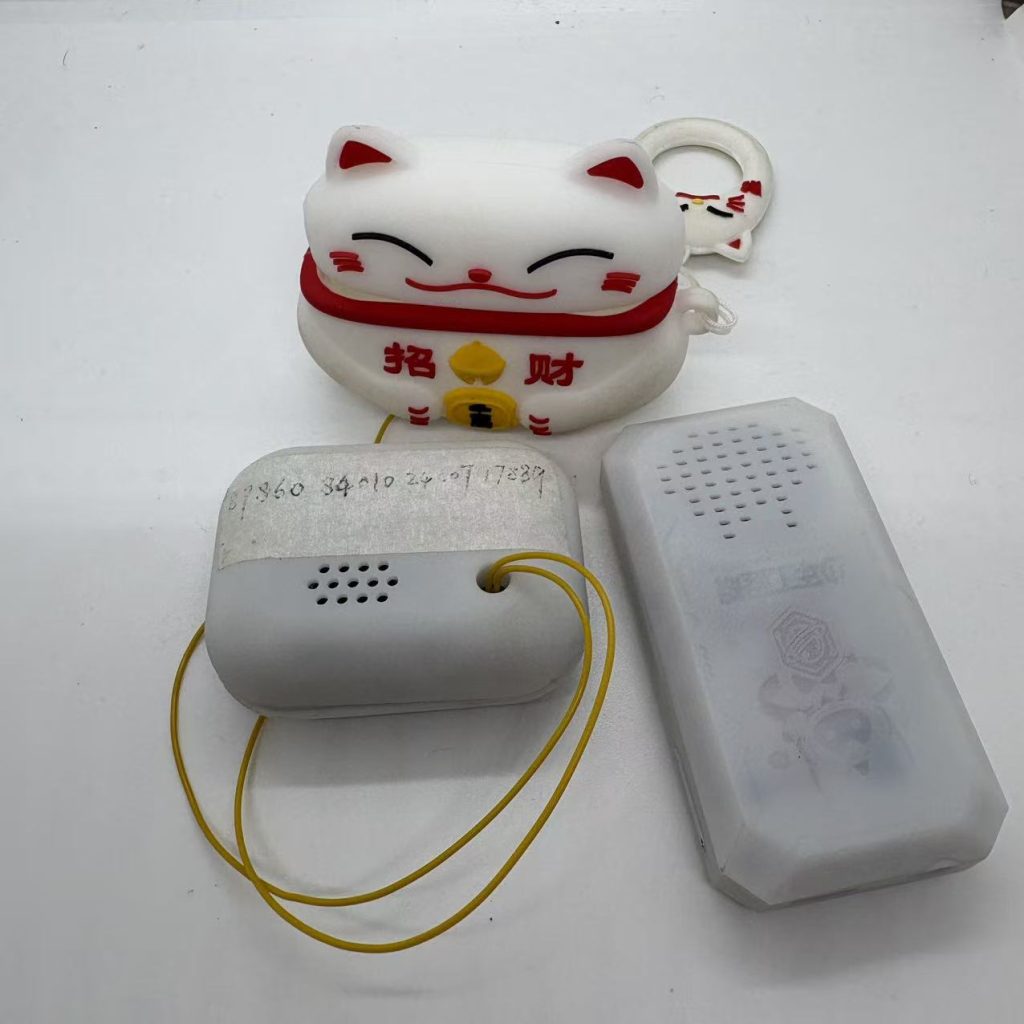
I was sitting at my desk, talking to Amis, our AI hardware product. A sales rep was on a phone call a few feet away. He wasn't shouting, just speaking at a normal conversational volume in the same room. Suddenly, Amis stopped mid-sentence, abandoned our conversation, and started parsing what the sales rep was saying. It completely forgot that I was in the middle of talking to it.
That was the exact moment I realized: handling user interruption—what the voice AI world calls "barge-in"—is infinitely harder than I had assumed.
What We Were Trying to Achieve
The goal sounds simple: make an AI voice toy feel like talking to a real human. If you say "stop," call its name, or just start speaking while it's talking, the device should immediately catch on, shut up, and switch to listening. Smart speakers have conditioned users to expect this as a basic UX standard.
To make this happen, I added a dedicated hardware IC to our BOM and paired it with a custom set of algorithms. We went through hardware revisions, firmware debugging, testing, and endless re-tuning. We sunk a massive amount of time into it.
It turned out to be brutally difficult to dial in.
The Edge AI Context Trap
The fundamental issue is that interruption isn't something you can judge simply by whether a sound is "loud enough" or "close enough." It is deeply contextual. It depends entirely on *who* is speaking, *where* they are speaking from, and *whether they are actually addressing the device*.
Our sales rep was loud and relatively close, but he wasn't speaking to Amis. A human brain filters this context instinctively. For an edge algorithm, it is an almost impossible task.
Every obvious heuristic falls apart in real-world testing:
- Distance/Proximity? Unstable. Kids carry the toy around, drop it on the floor, or leave it on a nightstand. Acoustic distance changes constantly.
- Volume thresholds? Ambient noise, background chatter, and room acoustics create a chaotic mix. You cannot cleanly isolate intent from sheer volume.
- Voiceprint / Speaker ID? In theory, recognizing the owner's voice solves the issue. In practice, the compute overhead, latency, and BOM cost required for reliable on-device speaker recognition are completely out of reach for a budget-constrained consumer toy.
Smartphones and flagship smart speakers handle barge-in effectively because they are backed by multi-microphone far-field arrays, high-performance NPUs, and cloud compute. Squeezing that infrastructure into a palm-sized toy ruins your BOM cost, power budget, and form factor overnight.
The Reality of Hardware UX Trade-offs
I'll be honest: hitting this wall was deeply frustrating. Not because the technology doesn't exist in the abstract, but because I had pegged barge-in as a minor micro-interaction to polish in a quick sprint. Instead, it turned out to be a systemic engineering problem.
So how did we resolve it?
Our current solution isn't perfect—in noisy, open environments, mis-triggers still happen. We ended up tightening the algorithm's boundaries as strictly as possible to reduce false positives, while ensuring it still responds when a user genuinely interrupts it.
This experience reaffirmed something fundamental: in AI hardware, the user experiences that look "simple" on the surface are almost always the hardest engineering bones to chew.
If you're building voice-first hardware or wrestling with edge DSP, I'd love to hear how you're handling barge-in. Solving this in a vacuum is exhausting—let's swap notes in the comments.