
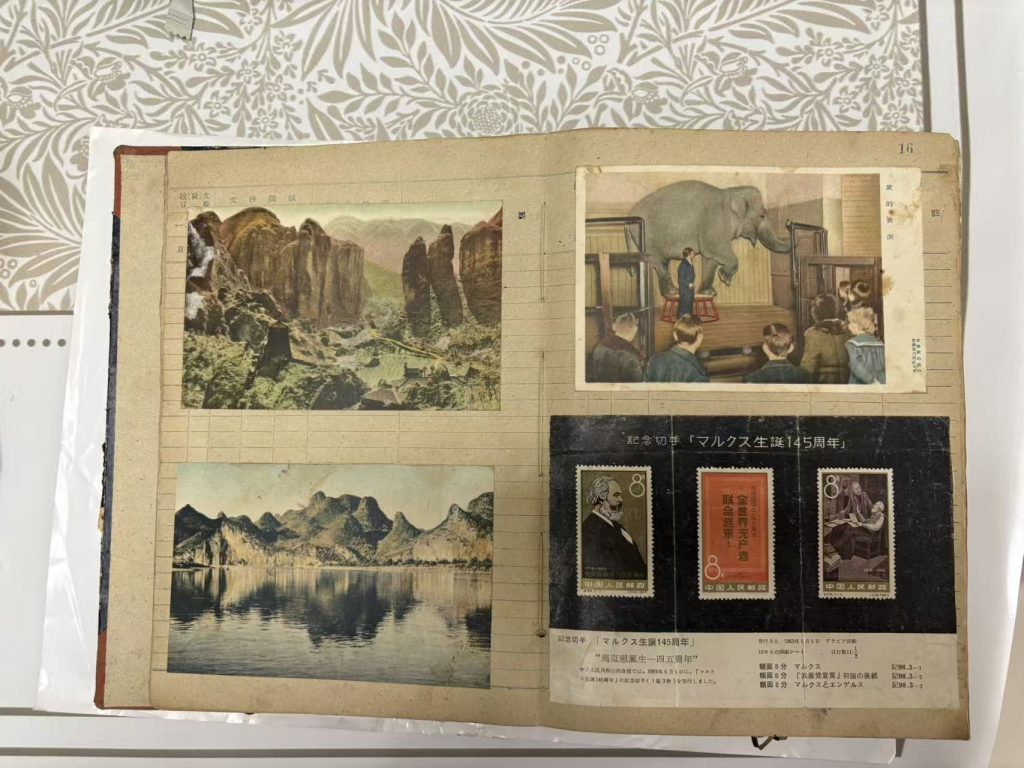
My mother kept a handwritten notebook.
<div class="aice-quick-answer" style="background:#f0f7ff;border-left:4px solid #2563eb;padding:14px
She didn't buy it at a store—she transcribed it line by line from newspapers and magazines. Back then, we had no TV and very few books. To show us what the world outside looked like, she had to rely on her pen. Whenever she found an interesting passage, she wrote it down. Over time, it turned into a thick volume. As a child flipping through those pages, I could feel the sheer effort she poured into us.
We also had a Sanyo cassette recorder, a rare luxury for that era. My father worked out of town and only came home once every six months. Before leaving, he would sit in front of the tape player and record everything he wanted to tell us. Not grand lectures—just practical advice and things he thought we should know. When we pressed play, it felt like he was right there in the room.
Looking back, that cassette recorder and that handwritten notebook were the only technologies available to their generation. They put everything they had into a single goal: helping their children see a bigger world.
From Chemistry to Hardware
Growing up, my female role models were limited—it felt like Marie Curie was the only one ever mentioned in books and classrooms. Subconsciously, that led me to study chemistry in college. But I wasn't Marie Curie. After exploring different fields, I eventually circled back to what I truly loved: art, IoT, gaming, and ultimately, AI.
Today, my work is about connecting these dots at the intersection of AI hardware and software.
I don't build smartphone apps. I build real, physical objects that sit on your desk or living room table. I have an conviction: AI shouldn't just stay trapped inside computer screens or behind smartphone glass. It should be like water or electricity—existing naturally in various physical forms throughout our daily lives. Technology only truly matters when it's seamless, accessible, and tactile.
The Next-Gen Family Notebook
The AI projector I'm building is part of that vision. A parent and child sit together and speak their imagined stories out loud. The AI generates a unique picture book, drawing it page by page and reading it back to them. It doesn't rely on generic templates; the story grows organically from their own minds.
The first time I saw a child use it, he and his mom made up a story about a tiny sea monster. As they kept talking, both of them broke into laughter when the image rendered on the wall, looking almost identical to what they had pictured. In that exact moment, I knew this work was worth doing.
The system also asks guided questions. Not to test the child, but to prompt deeper thinking—*Why did the character make that choice? What would happen if the ending changed?* That kind of guidance was the companionship I lacked most growing up. It doesn't give you answers; it sits with you while you think.
Sometimes I wonder: if my mother had this technology back then, would her notebook still exist?
Probably not. But her underlying motive—to help her kids see a bigger world—would remain unchanged. The tools evolve, but the intent stays the same.
My mother used a pen and paper. I use AI, custom hardware, and projection screens. My father used a tape recorder to preserve his voice; today, we empower children to preserve their own stories and revisit them when they grow up.
This is the modern family notebook—not written by a mother alone, but co-created by the entire family.
Did you have something like this growing up—a specific book, a cassette tape, or an object that made you feel like someone poured everything into your future? I’d love to hear your story in the comments.