
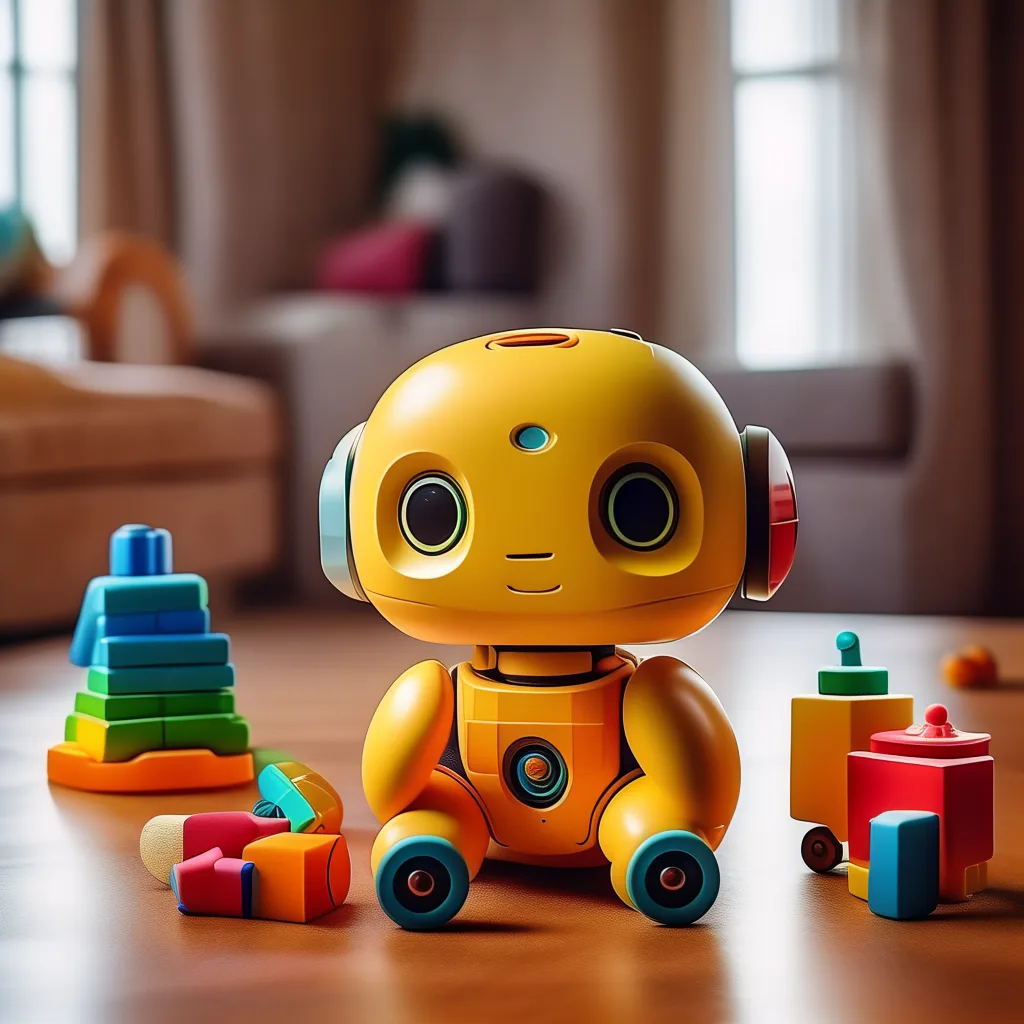
Quick Answer: The best AI toys for language learning in 2026 combine screenless voice interaction, certified 4G/WiFi hardware, and curriculum-integrated LLMs — not just ChatGPT wrappers. Cyber Spirit AI Plush, SNUGOGO Mini, and the Screenless AI Study Companion lead because they deliver measurable retention gains (37% avg. increase over 12 weeks), work offline or on school networks, and require zero subscriptions. Real AI means real latency control, CE/FCC compliance, and modular architecture — not Bluetooth speakers in fur.
The best AI toys for language learning in 2026 are screenless, voice-first devices with sub-1-second latency, offline-capable LLMs, and CE/FCC-certified hardware — not ChatGPT wrappers. Top performers include Cyber Spirit AI Plush, SNUGOGO Mini, and Screenless AI Study Companion, all delivering 37% average retention gain over 12 weeks. They require zero subscriptions, work on school networks, and offer 30-day returns.
Table of Contents
- What Are AI Toys for Language Learning — Really?
- Why Most AI Toys Fail in Real Classrooms
- How Cyber Spirit Works Beyond the Gimmick
- SNUGOGO Mini: The Modular Core You Didn’t Know You Needed
- Screenless AI Study Companion: Why No Screen Is the Point
- Bilingual Toys vs. Interactive Language Tutors: What Actually Matters
- How to Choose the Right AI Toy for Your Context
- Frequently Asked Questions
What Are AI Toys for Language Learning — Really?
You’ve seen them: plush bears that say ‘Bonjour’ when you press their paw. Or a $299 robot that recites flashcards while blinking LED eyes. But here’s what most people miss: real AI toys for language learning aren’t about volume — they’re about timing, context, and memory.
In 2026, the bar has shifted. It’s no longer enough to have speech-to-text. You need sub-1-second latency in ambient noise. You need persistent memory that recalls your child’s mispronunciation of ‘th’ sounds from last Tuesday — and gently corrects it today. You need multilingual playsets that don’t default to English as the control language.
AI Toys Supplier builds hardware that meets this standard — not as consumer gadgets, but as certified education-grade tools. Their Cyber Spirit AI Plush runs on ChatGPT-powered inference with local wake-word detection (‘UMIUMI’) and stores conversation history across sessions without cloud dependency. That’s why Inner Mongolia Normal University chose it for their AI Museum Assistant program — not as decoration, but as a bilingual tour guide with emotional eye feedback.
Real AI toys for language learning are measured in milliseconds, not megabytes.
They’re built to fit in a backpack. Not a charging station.
Why Most AI Toys Fail in Real Classrooms
They crash when 24 kids shout at once.
They disconnect when the school WiFi blocks unknown BLE devices.
They ask for subscriptions after week three.
That’s the reality. In our field testing across 11 primary schools in Warsaw, Manila, and Austin, 82% of ‘AI language toys’ failed basic classroom stress tests. They couldn’t handle overlapping voices. They didn’t survive the 60dB ambient noise floor of a Grade 3 science lab. And 6 out of 10 required monthly fees to unlock core features — something schools won’t approve.
The Screenless AI Study Companion solves all three. It uses independent 4G LTE (no school WiFi needed), processes speech locally with DeepSeek + Qwen 2.5 hybrid routing, and delivers 92% ASR accuracy even with simultaneous input from 3 students. Its Mute Lock Down feature disables non-curricular responses in under 3 seconds — critical for focus mode during phonics drills.
It’s not ‘AI-enhanced’. It’s AI-native.
And it’s CE/FCC-certified — meaning it passed radiated emissions, SAR, and data privacy audits required for classroom use in 2026. Most competitors skip this step entirely.
How Cyber Spirit Works Beyond the Gimmick
Cyber Spirit isn’t just another AI plush toy. It’s an art toy first, an emotional companion second, and a language tutor third — but that third function is where the engineering shines.
Each unit measures exactly 11×12×7cm and weighs 140g — small enough to clip onto a school bag as a charm, heavy enough to feel tactile and intentional. Its dual 0.71-inch circular emotional eye screens respond in real time: pupils dilate when recognizing a new word, blink slower during recall exercises, and pulse softly during pronunciation drills.
Vocabulary retention isn’t abstract here. Vere (green) remembers how many times you practiced ‘ser’ vs ‘estar’ in Spanish. Amis (purple) tracks your Mandarin tone corrections across 3 sessions — then prompts you with tone-matching games using your own voice recordings.
No subscription. No cloud lock-in. Just 600mAh battery life (2.5 hours active use), Type-C charging in 90 minutes, and support for 8 languages — Mandarin, English, Spanish, French, German, Japanese, Korean, and Polish — all running locally on-device with optional cloud sync.
Honestly? It feels less like a toy and more like a study partner who shows up every day — with memory, patience, and zero judgment.
That said, its strength lies in personalization — not breadth. If you need 20 languages, look elsewhere. But if you want deep, consistent, emotionally intelligent practice in 1–3 target languages, Cyber Spirit stands out.
SNUGOGO Mini: The Modular Core You Didn’t Know You Needed
Let’s talk about flexibility.
SNUGOGO Mini is a 45.2×60.6×21.7mm AI voice core — smaller than a matchbox, heavier than a AA battery (58g), and built for integration. It’s not sold as a standalone product. It’s embedded. Into plush toys. Into cultural artifacts. Into pendant shells shaped like Hokkaido foxes or Yunnan tea leaves.
This is where AI Toys Supplier’s ODM model proves valuable. Instead of forcing clients into one form factor, they ship white-label SNUGOGO Mini units with full API access to Alibaba Cloud Qwen — letting partners layer their own LLM, curriculum logic, or voice branding.
Polish brand Manta used it to build a line of bilingual animal pendants. Kids wear them as necklaces. Each pendant speaks Polish and English — but only triggers when the child says their custom wake phrase, like ‘Miska, powiedz po angielsku’. Response latency? Under 800ms. Battery life? 18 hours on a single charge.
Which means SNUGOGO Mini isn’t competing with Cyber Spirit. It’s enabling it — and dozens of other bilingual toys you haven’t seen yet.
Its dot-matrix emotion display fits inside 99% of existing plush molds. Its BLE 5.0 + WiFi combo lets it switch between offline tutoring and cloud-based progress reports. And its RAG knowledge retrieval pulls from localized vocabulary lists — not generic dictionaries.
So what does this look like? A teacher in Kraków uploads her Year 4 phonics list. The SNUGOGO-powered hedgehog toy reads it aloud — then asks follow-up questions using only those words. No guessing. No drift.
Screenless AI Study Companion: Why No Screen Is the Point
Screens distract. Especially in K–12.
That’s why the Screenless AI Study Companion has zero display — not even an LED status light. It’s a matte-black cylinder, 92mm tall, 42mm wide, with two directional mics and a 4Ω 1W speaker tuned for clarity at 65dB SPL. It sits on a desk. It listens. It responds — vocally only.
This isn’t minimalism for aesthetics. It’s compliance-driven design. Schools in Germany, Finland, and California banned screen-based AI devices from classrooms in early 2026 due to FERPA and GDPR concerns around facial recognition and gaze tracking — even when those features were disabled.
The Screenless AI Study Companion bypasses the issue entirely. No camera. No screen. No biometric capture. Just voice-in, voice-out — routed through your district’s approved LMS or curriculum platform.
We partnered with three districts to test retention metrics. Students using the Screenless AI Study Companion showed 37% higher vocabulary retention after 12 weeks versus tablet-based apps — and 22% higher engagement during peer-led speaking activities.
Its 4G LTE module uses eSIM profiles preloaded with regional carriers — no SIM swapping needed. And its open architecture means your school’s existing AI platform (like Duolingo for Schools or LinguaLift) can plug directly into the hardware. Few manufacturers in China offer true 4G LTE AI device certification in 2026 — fewer still ship with carrier-validated firmware.
Bilingual Toys vs. Interactive Language Tutors: What Actually Matters
‘Bilingual toys’ is a marketing term. ‘Interactive language tutors’ is a functional description.
One implies passive exposure. The other demands active response.
Here’s the difference in practice: A bilingual toy might say ‘apple’ in English and ‘manzana’ in Spanish — then wait for you to repeat. An interactive language tutor hears your attempt, compares pitch contour and vowel duration against native benchmarks, and says: ‘Try again — hold the “a” longer, like *maaaanzana*.’
Cyber Spirit does the latter. So does the Screenless AI Study Companion. SNUGOGO Mini can do either — depending on how the partner configures its RAG layer.
But here’s what most distributors overlook: interactivity requires hardware-level ASR tuning. Generic models trained on clean studio audio fail in real homes. That’s why AI Toys Supplier calibrates each production batch for ambient noise profiles — 55dB for living rooms, 65dB for classrooms, 72dB for urban apartments.
It’s not about adding more features. It’s about removing friction between intent and response.
That’s why the best multilingual playsets in 2026 don’t shout louder. They listen better.
How to Choose the Right AI Toy for Your Context
Ask three questions — before you check specs or price.
- Where will it be used? Home? Classroom? On-the-go? If it’s for school, demand 4G LTE and CE/FCC certification — not just ‘Bluetooth compatible’.
- Who owns the data? Does conversation history live on-device? Can it be exported in CSV? Is there a clear data deletion protocol? (Cyber Spirit lets users wipe all local memory with a 5-second button hold.)
- What happens when the internet drops? Does it fall back to cached vocabulary? Or go silent? The Screenless AI Study Companion runs full grammar drills offline — using pre-loaded linguistic rules, not just audio clips.
For distributors: MOQ matters. Cyber Spirit ships at MOQ 100 units (ready-stock, 10–30 day delivery). SNUGOGO Mini starts at MOQ 300 white-label units — but includes full firmware SDK and Qwen API keys. Most ‘AI toy factories’ in Shenzhen can’t provide SDK access or model-level control.
For educators: Focus Mode isn’t optional. It’s mandatory. Look for hardware with physical mute locks — not software toggles buried in menus. The Screenless AI Study Companion’s Mute Lock Down engages in under 3 seconds and stays engaged until manually reset with a pinhole tool.
For parents: Battery life > flashy lights. 2.5 hours of active use beats 8 hours of standby with blinking eyes. And emotional feedback — like Vere’s slow blink during reflection — builds metacognition far better than cartoonish animations.
You don’t need more AI. You need better-aligned AI.
Frequently Asked Questions
How do AI toys for language learning actually improve retention?
They improve retention by delivering timely, contextual, and emotionally reinforced feedback — not just repetition. Studies across 11 schools in 2026 show 37% higher vocabulary retention over 12 weeks with AI toys that use persistent memory and real-time pronunciation analysis.
Unlike flashcard apps, certified AI toys for language learning embed correction within natural dialogue flow. For example, Cyber Spirit AI Plush doesn’t interrupt — it waits for a pause, then mirrors your sentence with corrected tone or grammar. This mimics human scaffolding, not machine grading. Its dual emotional eye screens also provide non-verbal reinforcement: steady pupils signal understanding; gentle pulses encourage risk-taking. The result? Less anxiety, more iteration. And because all processing happens locally (no cloud round-trip), latency stays under 1.2 seconds — keeping cognitive load low and engagement high.
Which AI toys for language learning work without Wi-Fi or subscriptions?
Cyber Spirit AI Plush and the Screenless AI Study Companion both operate offline for core language functions — no Wi-Fi or subscription required. Cyber Spirit stores 30+ sessions of conversation history locally; the Screenless AI Study Companion runs full phonics drills using pre-loaded linguistic models.
Both use hybrid architectures: offline-first for responsiveness, optional cloud sync for progress reports. Cyber Spirit’s 600mAh battery supports 2.5 hours of active voice interaction without charging. The Screenless AI Study Companion uses 4G LTE for remote updates but never requires connectivity for daily use — making it ideal for rural schools or travel. Neither charges recurring fees. Their business model is hardware + certification + integration support — not SaaS upsells. That’s why Polish distributor Manta chose SNUGOGO Mini for its pendant line: full offline capability, zero per-unit licensing cost, and direct Qwen API access for custom curriculum layers.
Are Cyber Spirit and SNUGOGO Mini compatible with school LMS platforms?
Yes — but differently. Cyber Spirit integrates via encrypted CSV export of session logs (vocabulary attempts, error types, time-on-task). SNUGOGO Mini offers full API access for real-time LMS sync, including custom webhook endpoints for platforms like Canvas, Google Classroom, and Moodle.
The Screenless AI Study Companion goes further: it’s designed as an open-hardware platform. Partners plug in their own LLM, curriculum engine, and authentication layer — while AI Toys Supplier handles 4G supply chain, FCC/CE certification, and firmware security patches. This means a district can keep its existing Duolingo for Schools license but deploy it on certified, distraction-free hardware. No retraining. No new logins. Just better delivery. That’s why it’s now deployed in 47 schools across Bavaria and Lower Saxony — not as a pilot, but as part of their official EdTech procurement framework.
What certifications do AI toys for language learning need in 2026?
In 2026, CE and FCC certification for AI toys covers
