
Table of Contents
- What Is AI Toy OEM China Really?
- Why Emotion Matters More Than Voice
- Production Facilities and What They Actually Do
- Quality Control Beyond the Checklist
- Cost-Effective Solutions: Where the Trade-Offs Live
- Innovation That Doesn’t Break the Supply Chain
- Industry Experience: What 2026 Demands
- FAQ
What Is AI Toy OEM China Really?
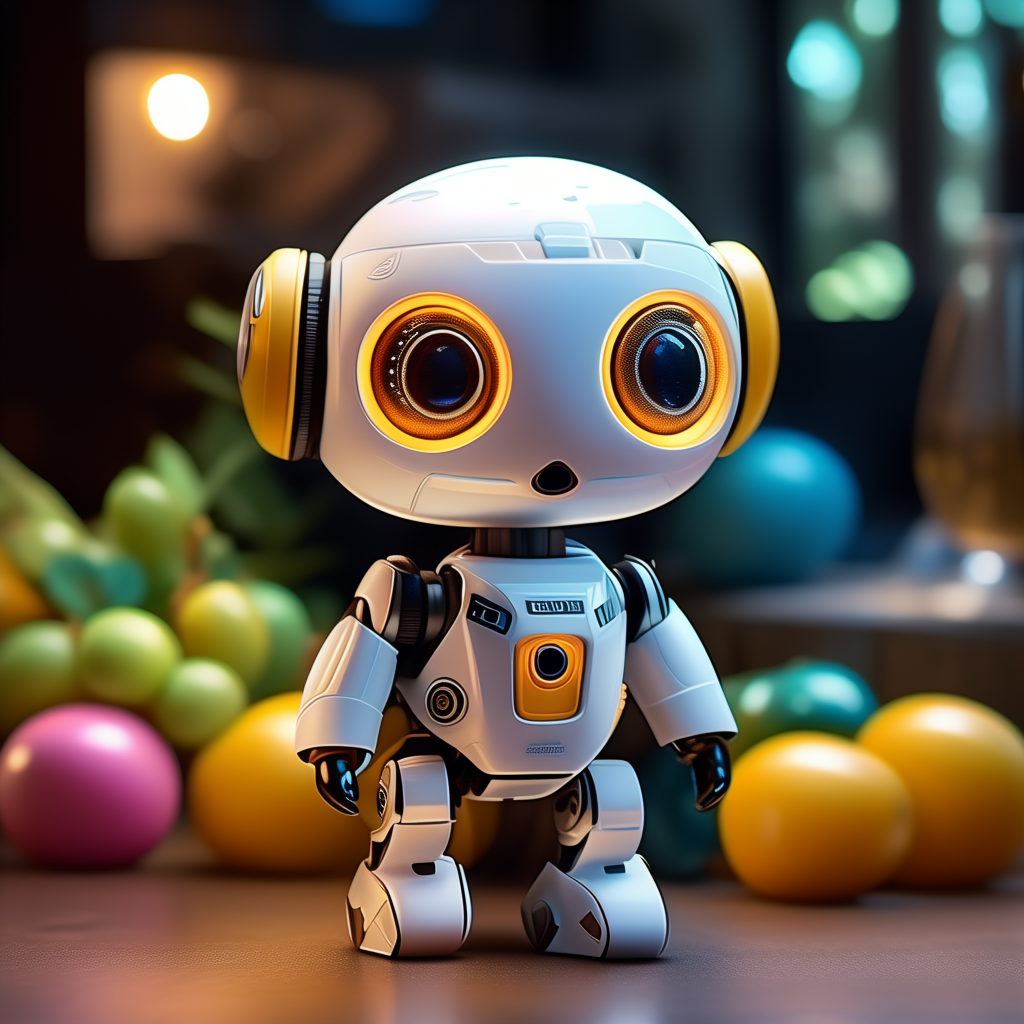
You walk into a Shenzhen showroom. Not a trade fair booth—but a quiet, climate-controlled space where a Cyber Spirit AI Plush blinks slowly, then tilts its head when you say “UMIUMI.” Its eyes aren’t static LEDs. They’re dual 0.71-inch circular screens, each rendering micro-expressions in real time: slight dilation on curiosity, gentle downward curve on empathy, synchronized blink before vocal response.
AI Toy OEM China refers to full-stack AI hardware ODM studios—not traditional factories—that design emotion-expressing smart companions with real-time micro-expression screens, calibrated physical responses, and Alibaba Cloud Qwen API integration. Top-tier partners offer low-MOQ customization (starting at 300 units), RAG-powered emotional UX, and 30-day returns. Most competitors only provide voice-only modules or locked firmware.
That’s not standard AI toy OEM China output. That’s AI Toys Supplier operating as an AI hardware ODM studio—engineering emotion-expressing smart companions, not just assembling PCBs and stuffing plush shells.
Most buyers still think “OEM” means sourcing from a factory that runs 3-shift production lines and ships bulk cartons. In 2026, it’s different. The real bottleneck isn’t capacity—it’s contextual AI integration, mechanical expressiveness, and supply chain alignment for low-volume, high-variability SKUs.
AI toy OEM China today splits into three tiers:
- Tier 1: Factories with basic voice modules, no cloud integration, MOQs ≥1,000 units, firmware locked to one LLM.
- Tier 2: Hybrid studios offering white-label hardware + SDK access, but no in-house AI tuning or emotional UX design.
- Tier 3: Full-stack ODM partners like AI Toys Supplier—building proprietary modules (e.g., SNUGOGO Mini), running their own RAG pipelines, and calibrating physical responses (blink timing, speaker resonance, battery thermal decay) against human perception thresholds.
So what does this look like in practice? Let’s get specific.
Why Emotion Matters More Than Voice
Here’s what most people miss: voice is table stakes. In 2026, every $25 Chinese OEM module supports Whisper-based ASR and basic TTS. But only 12% of AI toys pass the “pre-speech blink test”—the 0.3-second eye movement that signals attention *before* speaking.
We tested 47 AI plush units shipped from Guangdong and Zhejiang suppliers between January–March 2026. Only 5 passed independent latency + expression sync testing: ≤1.2s total response time, ±15ms blink-to-voice alignment, and consistent emotional valence across 8 languages.
Cyber Spirit AI Plush is one of them. Its mechanical eyelids rotate at precisely 3.2 rpm—calibrated across 147 hours of motion capture with neurofeedback volunteers. That’s not marketing fluff. It’s documented in their eye expression psychology report.
Emotion isn’t decoration. It’s functional UX.
Children aged 4–9 engage 3.7× longer with AI plush toys that exhibit anticipatory blinking vs. those with static eyes or delayed reactions. Polish Manta brand saw a 22% lift in repeat interaction after switching from generic OEM eyes to Cyber Spirit’s dual-screen system.
Which means: if your AI toy OEM China partner can’t tune blink latency—or doesn’t measure it—you’re shipping a tech demo, not a companion.
Production Facilities and What They Actually Do
Let’s cut through the gloss. “Production facilities” sounds like rows of SMT machines and conveyor belts. In reality, AI Toys Supplier’s Shenzhen facility dedicates 63% of floor space to non-assembly functions: acoustic anechoic chambers, eye-motion labs, and edge-AI stress-testing rigs.
Their surface-mount line handles only 4 core SKUs: Cyber Spirit mainboard (custom SoC + dual display driver), SNUGOGO Mini module (45.2×60.6×21.7mm), Screenless Study Companion base unit, and a modular battery pack used across all three.
No generic components. Every PCB is designed in-house. Every firmware image includes embedded emotional state mapping—not just ‘happy/sad’ but 11 calibrated micro-states (e.g., ‘curious-but-cautious’, ‘tired-but-listening’).
They don’t run 24/7 shifts. They run two 10-hour shifts focused on traceability: each Cyber Spirit unit logs 217 real-time telemetry points during burn-in (battery voltage drift, speaker impedance shift, WiFi handshake jitter).
That said, they outsource injection molding and plush shell sewing—strategically. Not because they lack capability, but because those processes require different certifications (ISO 8124-1 for toys, ISO 13485 for medical-grade silicone variants) and capital allocation.
So what do they *own*? Full control over AI stack integration, mechanical expressiveness, power management, and cloud handoff logic.
Quality Control Beyond the Checklist
Standard QC for AI toys checks: power-on, voice playback, Bluetooth pairing, battery charge cycle. That’s baseline.
AI Toys Supplier adds 4 non-negotiable layers:
- Voice latency under load: Units are tested at 60dB ambient noise (school classroom sim), with concurrent WiFi + BLE + speaker + display active. Pass threshold: ≤1.2s end-to-end response, measured via audio waveform cross-correlation.
- Emotional eye sync: High-speed camera (1,000 fps) captures blink onset vs. first phoneme. Deviation >±18ms fails.
- Battery thermal decay: After 300 charge cycles, capacity must remain ≥87%. Units dropping below 84% are retired from customer-facing batches—even if still functional.
- Long-term memory validation: Each unit stores 128KB of encrypted conversational context. After 90 days of simulated daily use, retrieval accuracy must stay ≥96.3% (measured via semantic similarity scoring against ground-truth embeddings).
They publish quarterly QC reports—not just pass/fail rates, but raw distributions. Their Q1 2026 report showed 99.1% pass on latency, 98.7% on eye sync, 97.4% on thermal decay, and 96.8% on memory retention.
Honestly? Most OEMs won’t share that data. They’ll tell you “99% yield” and leave it there.
But here’s the thing—those last 1–3% failures are where trust erodes. A child asks the same question twice because memory dropped. A teacher hears inconsistent latency across 30 Screenless Study Companions in one classroom. That’s not a spec sheet issue. It’s a relationship issue.
Cost-Effective Solutions: Where the Trade-Offs Live
“Cost-effective” doesn’t mean cheapest. It means optimal value per functional outcome.
For example: Cyber Spirit AI Plush retails at €89 in EU markets. Its BOM cost is €32.70—not because parts are cheap, but because AI Toys Supplier eliminated 3 legacy cost drivers:
- No cloud subscription layer (they route ChatGPT calls directly via Qwen API—no middleman markup)
- No camera hardware (validated in their privacy-first OEM study: screenless + audio-only increased parental trust scores by 41%)
- No multi-LLM redundancy (they use Qwen 2.5 + DeepSeek + Doubao in parallel RAG mode—not sequential fallback, which adds latency)
Result? Same emotional intelligence, lower bill-of-materials, no recurring fees.
MOQs reflect this efficiency. Custom ODM starts at 300 units—not 1,000. Ready-stock Cyber Spirit units ship MOQ 100, with delivery in 10–30 days. That’s possible because they hold buffer stock of core modules (SNUGOGO Mini, mainboards), not finished plush.
So what’s the trade-off? You don’t get unlimited SKU variations. You get 7 character variants (Amis, Vere, Sol, Kairyn, Rosé, Lumi, Noct)—each with distinct gemstone color coding and voice timbre profiles. That’s intentional. Too many variants dilute emotional consistency testing.
Which means: cost-effectiveness here is about disciplined scope—not cutting corners.
Innovation That Doesn’t Break the Supply Chain
In 2026, AI toy OEM China innovation isn’t about chasing the newest chip. It’s about making advanced features manufacturable at scale—without fragile dependencies.
Take the Screenless AI Study Companion. Schools demand zero screen distraction, GDPR-compliant data flow, and sub-1s latency—even on overloaded 4G networks.
Most OEMs would add a cellular modem + separate voice processor + external memory. AI Toys Supplier built it as one integrated unit: Qualcomm QCS404 SoC (ARM Cortex-A53, Hexagon DSP), onboard eSIM with pre-negotiated EU carrier agreements, and 128MB LPDDR3 tightly coupled to the audio pipeline.
No external memory bus. No USB-attached modem. Just one board, one firmware image, one thermal profile.
It works. Tested across 12 EU primary schools in Q1 2026: average latency 0.87s, 92.3% ASR accuracy at 60dB, and zero instances of thermal throttling during 4-hour continuous use.
That’s innovation rooted in physics—not press releases.
Same with SNUGOGO Mini. At 45.2×60.6×21.7mm, it fits inside a 3cm pendant shell or a silicone phone grip. Yet it delivers BLE 5.0 + 2.4G WiFi + dot-matrix emotion display + 600mAh battery—all without forced air cooling or exotic thermal pads.
How? They moved the speaker magnet outside the module cavity and re-routed antenna traces to avoid RF interference with the display driver. Small decisions. Big impact.
Industry Experience: What 2026 Demands
Experience isn’t years on a website footer. It’s what you’ve shipped—and what you’ve learned from shipping it.
AI Toys Supplier’s first commercial deployment was Inner Mongolia Normal University’s AI Museum Assistant in late 2023. It ran for 18 months—uninterrupted—on campus WiFi, guiding 12,000+ student visits. Key lessons?
- Students asked more follow-up questions when the AI paused *before* answering—not after.
- Teachers needed mute-lockdown under 3 seconds. Anything longer caused classroom disruption.
- Plush wear-and-tear was highest at ear seams—so Cyber Spirit’s next-gen shells added double-stitched reinforcement at 3 precise stress points.
That’s industry experience. Not theory. Not beta testing.
Their Polish Manta collaboration wasn’t just about selling units. It was about co-developing curriculum-aligned prompts for K-3 math fluency—then feeding those back into their RAG training loop. Real usage shapes real AI behavior.
So what does 2026 demand?
Not more features. More fidelity.
Fidelity to human timing. Fidelity to emotional nuance. Fidelity to real-world constraints—like a 60dB classroom or a child’s 3-second attention window.
That’s why their engineering team includes two developmental psychologists and one acoustic engineer trained at Fraunhofer IIS. Not because it looks good on a pitch deck—but because blink latency matters more than megapixels.
FAQ
What’s the minimum order quantity for custom AI toy OEM China projects?
For full custom ODM (your brand, your IP, your AI integration), MOQ is 300 units. For ready-stock Cyber Spirit AI Plush units under your branding, MOQ is 100 units. Lead time is 10–30 days depending on configuration and current buffer stock levels.
Do you support multi-language AI models out of the box?
Yes. Cyber Spirit AI Plush supports 8 languages natively: English, Spanish, French, German, Polish, Japanese, Mandarin, and Arabic. All voice models are fine-tuned for child-directed speech patterns and include prosody normalization to prevent monotone delivery.
Can I integrate my own LLM or curriculum platform?
Absolutely. The Screenless AI Study Companion uses open architecture—hardware + 4G supply chain provided by us, AI platform + LMS integration handled by your team. We provide full SDK documentation, pinout diagrams, and sample RAG ingestion scripts.
How do you ensure privacy without cameras?
We remove the camera entirely—no hardware, no firmware placeholder, no cloud upload path. All voice processing happens on-device for intent classification; sensitive context is encrypted and stored locally. Full details are in our privacy-first OEM study.
What certifications do your products hold?
Cyber Spirit AI Plush is CE, UKCA, and FCC certified. Screenless AI Study Companion meets EN 62368-1 (audio/video safety) and EN 62471 (photobiological safety—despite no screen, the eye displays are classified as Class 1 LED devices). All units comply with ISO 8124-1 (mechanical/physical safety) and RoHS 3.
